
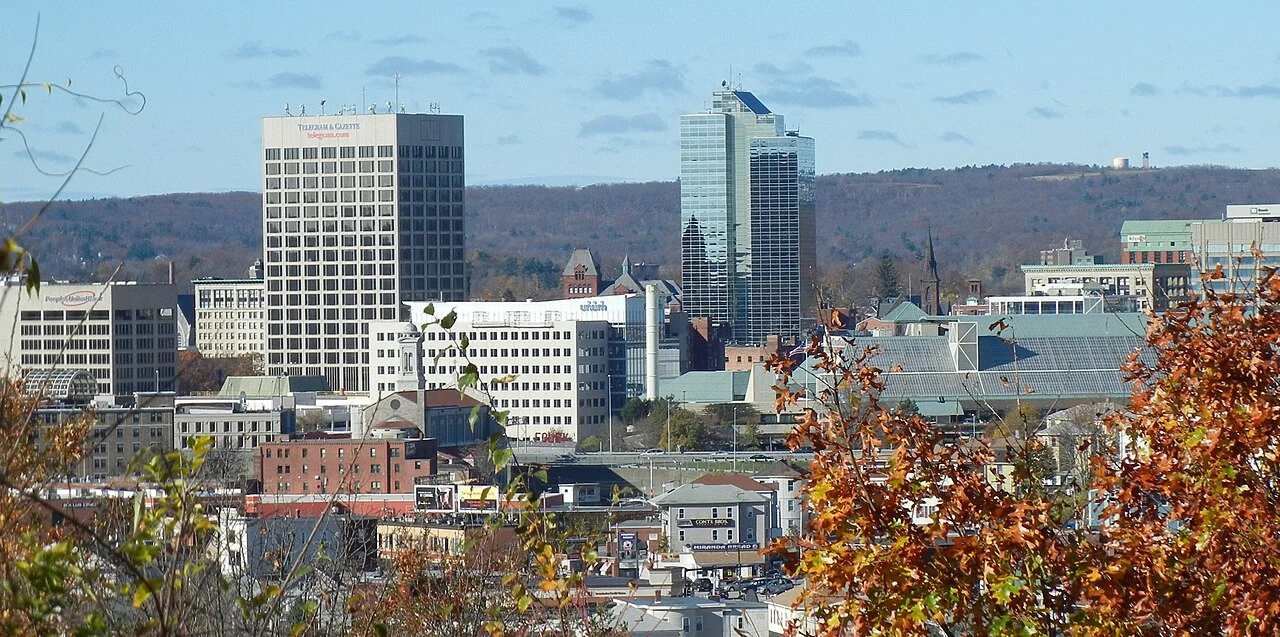
Commercial Roofers in Charlton, MA
For commercial properties in Charlton, MA, the defensible choice between repair, restoration, and replacement starts with roof-system condition, moisture findings, drainage performance, and remaining service life. Charlton's commercial growth has followed the Massachusetts Turnpike exit, anchored most visibly by Tree House Brewing's destination-scale production and taproom facility. We work on beverage-production buildings with heavy rooftop mechanical loads and on the smaller turnpike-adjacent businesses that have grown up around that traffic.
Brewing and Beverage-Production Roof Loads
A production brewery roof carries more rooftop equipment than almost any other building type we service: glycol chillers, CO2 and ammonia system components, boiler exhaust, and large-capacity HVAC serving both production floor and taproom space. Every one of those systems needs a curb, and the density of curbs on a production roof of this kind means flashing detail work dominates the labor estimate far more than field membrane installation does.
Refrigerant and process piping routed across the roof to reach rooftop condensers also needs to be planned around during any membrane work, since pipe supports and roof traffic patterns for maintenance crews have to stay clear of the actual roofing work zone.
Ammonia-based refrigeration systems, when present, add another layer of caution to roof planning, since any work near ammonia piping or condenser units needs coordination with the facility's safety protocols regardless of how routine the roofing task itself might otherwise be.
Because production downtime has a direct cost, we plan brewery and beverage-facility roof work in phases that keep critical rooftop systems operational, sequencing membrane replacement around, rather than under, active mechanical equipment wherever possible.
Taproom and event-space additions built onto an existing production building bring their own roof considerations, often steeper architectural roofing over the public-facing space paired with low-slope membrane over production, which means a single Charlton beverage facility can require two different roofing crews and two different material specs on one project.
Turnpike-Adjacent Commercial Buildings
The smaller retail, restaurant, and service buildings that have located near the turnpike exit to catch highway traffic are mostly simpler single-story low-slope roofs, but they see more sustained wind exposure than buildings set back in denser parts of town, similar to what we see on other interchange-adjacent Central Massachusetts sites. Roof edge and parapet fastening needs to account for that open exposure rather than a standard interior wind rating.
On these buildings we typically find:
- Standard rooftop HVAC package units on curb mounts
- Signage or pylon sign structural attachments
- Drive-through canopy roof-to-building transitions
- Parapet coping exposed to higher sustained wind
- Roof drains sized for a smaller original footprint after expansion
- Older EPDM membrane past its expected service life
Rural and Light-Commercial Buildings Away From the Exit
Away from the turnpike corridor, Charlton still has a scattering of smaller commercial buildings serving the surrounding rural area, farm-supply and light-service businesses among them. These buildings tend to have simpler roof geometry and lower penetration counts, and they're generally straightforward candidates for a mechanically attached membrane system without the complexity of the production or highway-frontage buildings.
Several of these rural buildings also double as storage for seasonal or agricultural equipment, which means roof access needs to accommodate taller vehicles and loading equipment moving in and out, a detail worth flagging before scheduling crane placement or material staging for a reroof.
Specifying and Budgeting for Charlton's Building Mix
Beverage-production facilities with dense rooftop equipment loads generally justify a fully adhered PVC or EPDM system over mechanically attached alternatives, since the membrane needs to conform tightly around a high number of curbs and pipe penetrations without relying on fastening patterns that can conflict with equipment layout. Material and labor cost per square foot runs higher here than almost anywhere else in this market, but the leak risk around process equipment makes the added cost the right call.
Turnpike-frontage retail and restaurant buildings are better fits for a standard 60-mil mechanically attached TPO system, with edge and fastening specs upgraded for the added wind exposure rather than the interior-town baseline. Rural buildings away from both the exit and the production facility usually don't need either upgrade, and a standard mechanically attached membrane at typical fastening spacing covers most of what we see on those simpler structures.
Questions Charlton Business Owners Ask
Why does a brewery roof cost more per square foot than a typical retail roof?
The density of rooftop equipment curbs for glycol, CO2, and HVAC systems means most of the labor goes into flashing detail rather than field membrane, which is a different cost driver than a standard low-penetration roof.
Can roof work happen while a production facility stays operational?
Yes, in most cases. We phase work to keep critical rooftop systems running and coordinate roof traffic around active mechanical equipment and maintenance access needs, scheduling the most disruptive tasks during planned downtime whenever the facility can provide one.
Do turnpike-adjacent buildings need different wind-rated details?
Yes. Open exposure near the interchange means higher sustained wind loads than buildings set back in denser areas, so edge and parapet fastening gets upgraded accordingly.
What roof system handles dense rooftop equipment best?
Fully adhered PVC or EPDM generally outperforms mechanically attached systems around high curb counts, since the membrane conforms more predictably to complex flashing without fighting fastening layout.
Are rural light-commercial roofs in Charlton simpler to maintain?
Generally yes. Lower penetration counts and simpler roof geometry mean these buildings are usually good candidates for standard mechanically attached systems without the added complexity of production or highway-frontage sites, which keeps both material and labor cost lower on a per-square-foot basis.