
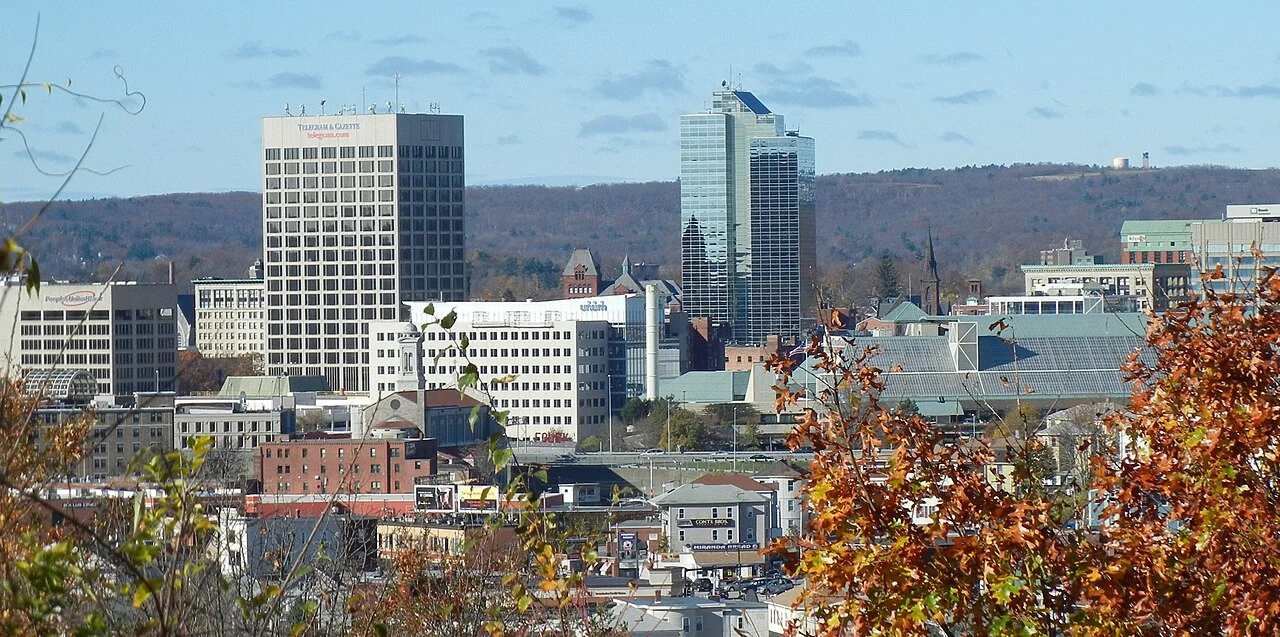
Commercial Roofers in Uxbridge
Commercial roofing in Uxbridge should begin with a documented assessment of membrane condition, seams, flashings, drainage, penetrations, and moisture before repair, coating, or replacement is selected. Uxbridge sits along Route 146 between Worcester and Providence, and its commercial roof stock reflects that position: through-traffic retail and light-industrial buildings near the highway, plus older mill-town commercial buildings tied to the Blackstone River Valley's manufacturing history. We approach each differently based on age and construction type rather than treating the whole town as one roof profile.
Route 146 Corridor Buildings
Businesses positioned to catch Route 146 traffic tend to be newer, single-story steel-frame construction with straightforward low-slope roofs, built within the last few decades rather than converted from an older use. These buildings are generally the most predictable jobs we take on in Uxbridge: known deck type, single roofing generation, and a penetration count limited mostly to standard HVAC package units.
The main variable on corridor buildings is exposure. Open commercial parcels along the highway see more direct wind and weather than buildings tucked into the older village center, and we spec fastening patterns and edge metal accordingly rather than using a blanket interior-town standard.
Retention pond grading around newer corridor sites also affects how roof drainage discharges at ground level, and on a few properties we've found roof leader piping tied into stormwater systems that were undersized once the building's roof area was finalized. We check that connection as part of any drainage assessment rather than assuming the civil design matched the finished roof plan.
Blackstone River Valley Mill Buildings
Uxbridge's older commercial core includes mill-era buildings tied to the Blackstone River Valley National Historical Park corridor, some still in industrial or storage use, others converted to offices or mixed commercial space. These buildings carry the same considerations we see across the Blackstone Valley: heavy timber or mixed-era decking, tall parapets, and roofing that's frequently been patched in sections rather than replaced wholesale.
River-adjacent buildings also see higher ambient humidity than the corridor sites further from the water, which affects how membrane and flashing sealants perform over time and how quickly biological growth develops on shaded roof areas.
Before quoting any mill-building work in Uxbridge, we confirm actual deck condition with test cuts, since visual inspection from the roof surface alone rarely tells the whole story on a building with this much patch-repair history.
Several mill buildings in the historical park corridor also carry preservation considerations that affect roofing choices, particularly on street-facing elevations where visible roof lines or cornice details are part of the building's historic character. We work with owners to keep those visible elements intact while still upgrading the functional roof assembly underneath.
Small Manufacturing and Warehouse Buildings
Scattered light-manufacturing and warehouse buildings around Uxbridge, some tied to the corridor's growing logistics activity and others older river-valley operations, typically have simpler roof geometry than the historic mill buildings but still need careful attention to loading-dock canopy transitions and larger rooftop unit curbs sized for higher-capacity HVAC.
On these buildings we typically check:
- Loading-dock canopy to main roof transition flashing
- Large-capacity rooftop unit curb condition
- Skylight or smoke-vent panel seals
- Drain capacity relative to building footprint
- Membrane condition at high-traffic maintenance access paths
- Parapet and expansion joint continuity on additions
Budgeting by Building Age and Corridor Position
Newer Route 146 corridor buildings are typically the most economical reroof jobs in Uxbridge, with a 60-mil mechanically attached TPO system delivering strong warranty coverage at a straightforward per-square-foot cost given the low penetration count and predictable deck. Mill-era buildings carry added cost from deck verification, patch-repair removal, and detail work around taller parapets, which we scope separately once test cuts confirm actual conditions.
Warehouse and light-manufacturing buildings fall in between, with cost driven mainly by rooftop unit size and loading-dock canopy detail rather than deck age, since most of these buildings are more recent steel-deck construction. Owners weighing a corridor building against an older village-center property should expect the mill building to take longer in the assessment phase even before a crew mobilizes, since test-cut scheduling and lab analysis of deck samples add time the newer buildings simply don't require.
Questions Uxbridge Building Owners Ask
Why do corridor buildings near Route 146 need different wind detailing?
Open exposure along the highway sees more direct wind than buildings in the older village center, so we adjust fastening patterns and edge metal specs to account for that added exposure.
How do you assess an old mill building before quoting a reroof?
We take test cuts to confirm actual deck condition rather than relying on visual inspection alone, since patch-repair history on these buildings can mask what's really happening underneath.
Does being near the Blackstone River affect roof performance?
Yes. Higher ambient humidity near the water can affect how sealants and flashing perform over time and accelerate biological growth on shaded, north-facing roof areas, which is why we check those zones more closely during river-adjacent inspections.
What roof detail matters most on warehouse buildings with loading docks?
The transition flashing between the loading-dock canopy and the main roof deck is a common leak point and needs specific attention during any inspection or repair, especially where the canopy was added after the original roof was already in place.
Are newer Route 146 corridor buildings cheaper to reroof than older mill buildings?
Generally yes, mainly because of predictable single-generation decking and lower penetration counts compared to the patch-repair history typical of older mill-era buildings, which also shortens the time needed for assessment before a project can even be scoped.