
Reroofing a Business Park Without Emptying the Parking Lot
Office parks along the Route 9 corridor and out toward the I-495 side of the county run multi-tenant buildings where a roof problem in one suite becomes a property manager's problem across the whole building. We approach office complex roofing as a scheduling exercise as much as a construction one, because the biggest cost driver on these jobs is usually disruption to tenants, not material.
Rooftop HVAC Density in a Multi-Tenant Building
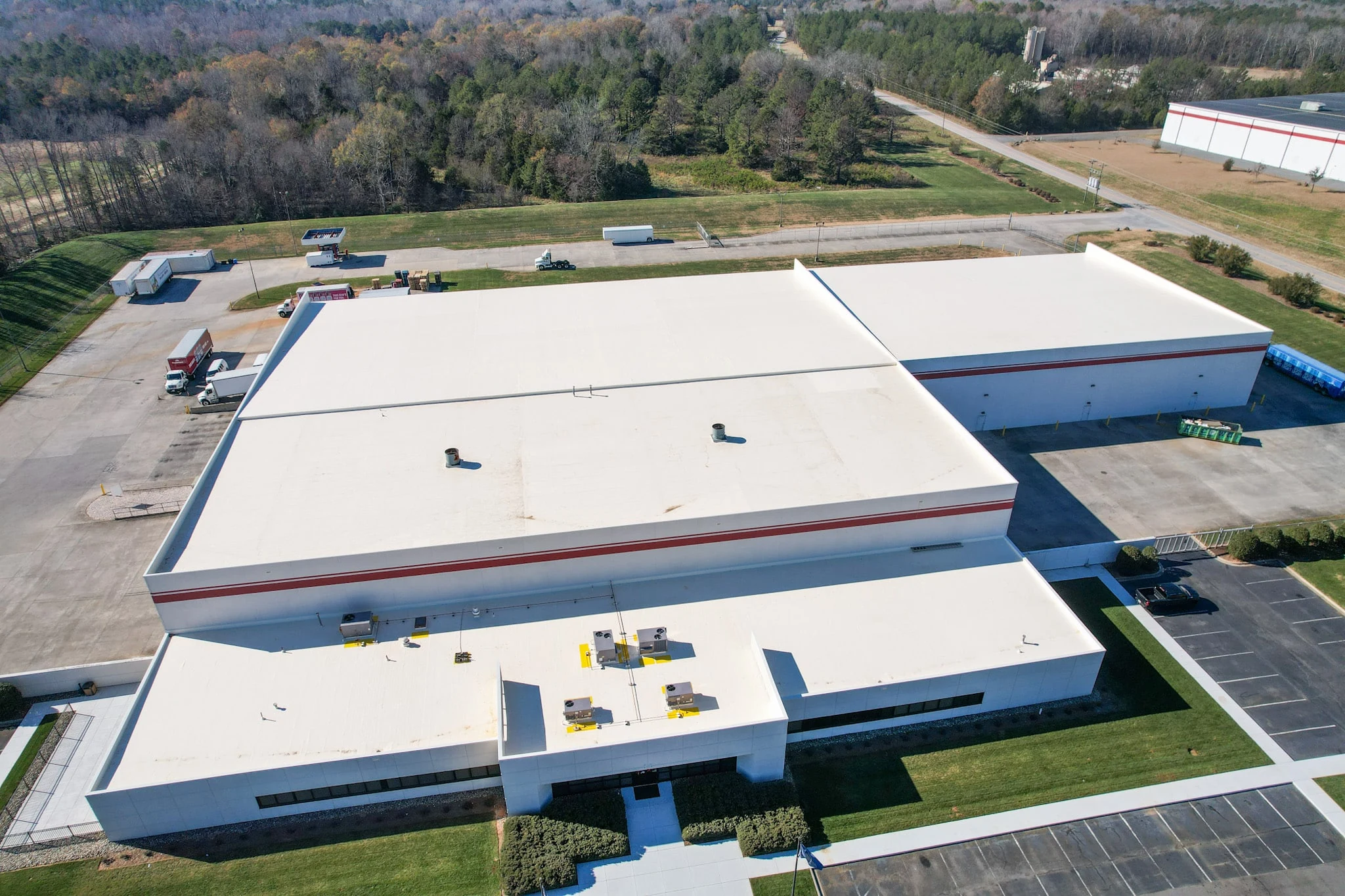
A single-tenant office might run two or three rooftop units. A multi-tenant complex can carry a unit per suite, sometimes stacked in on a roof that wasn't designed for that density when it went up decades ago. We map every curb before tear-off, note which units are actively used, and flag any that look original to a building where the tenant mix has turned over multiple times since. Abandoned curbs get properly capped rather than just flashed around, which removes a future leak point the next roofer would otherwise inherit. Where a suite's HVAC gets replaced mid-lease without notifying the roofing contractor of record, the new unit's curb sometimes doesn't match the old one's footprint, and we've found that mismatch is a quiet source of leaks on buildings that otherwise look well maintained from a distance.
Scheduling Around a Building Full of Different Businesses
Law offices, insurance agencies, small medical practices, and back-office operations often share one building, each with different tolerance for noise and different hours. We ask the property manager for a tenant list and rough hours before scheduling loud phases, and we sequence tear-off by section so no more roof stays open overnight than we can dry in and protect before a weather change.
Snow Load and Drainage on Flat Business-Park Roofs
Worcester sits higher and colder than Boston, and business-park roofs built flat or low-slope in the 1980s and 90s often carry drainage designed for a lighter snow load than the region actually delivers most winters. We check tapered insulation and drain capacity against current snow load requirements when we quote a full reroof, since a roof that's been fine for years can still be marginal once ice damming at parapet walls or roof-mounted equipment starts blocking drain paths during a heavy winter.
Cost-Per-Square-Foot Planning for Property Owners
Office complex owners usually manage a portfolio, not one building, so we break out cost per square foot by system type , TPO, EPDM, a coating over an existing membrane that still has service life left , so an owner can compare options across a capital plan rather than treating each building as an isolated decision. Recover over a sound existing roof often pencils out cheaper than full tear-off on a mid-life building, and we'll say so if that's genuinely the better number. Owners managing several buildings across the Worcester corridor also benefit from staggering replacements by a year or two rather than replacing every roof on the same cycle, which smooths out capital spending and avoids competing for the same crew availability across multiple properties at once.
Common Access and Parking Constraints
Business parks often share parking and access drives across several buildings, which means staging a dumpster or material lift can affect tenants in a neighboring building that isn't even part of the project. We coordinate staging locations with property management ahead of mobilization so a crane setup for one building's reroof doesn't block another building's loading area during business hours. Winter-quoted jobs get an added layer of planning around plowed snow storage areas, since a business park's designated snow piles sometimes sit exactly where a material staging zone would otherwise go.
- Curb-by-curb mapping to separate active units from abandoned ones
- Tenant-hours coordination before noisy or disruptive phases
- Snow load and drain capacity checks against current New England design standards
- Cost-per-square-foot comparisons across system types for portfolio planning
- Recover-versus-replace analysis on mid-life roofs
- Shared-access staging plans across multi-building parks
What Property Managers Ask Before Signing Off
Can you reroof one building in a multi-building park without affecting the others?
Generally yes, though staging areas and access drives are sometimes shared, so we confirm logistics with property management for every building nearby before mobilizing.
Is recover ever a legitimate option instead of full tear-off?
On a roof without wet insulation or structural issues, a recover system can extend service life at a lower cost per square foot than tear-off, and we'll recommend it when the existing roof genuinely supports it.
How do you handle abandoned rooftop units from old tenants?
We remove or properly cap the curb rather than flashing around a unit that's no longer connected, since an unused curb left in place is a common source of future leaks.
Will our building's drainage handle a heavier snow winter?
We check tapered insulation slope and drain capacity against current design snow load during any full reroof quote, since older business-park roofs weren't always built to today's standard.
Can work be scheduled around specific tenants' business hours?
Yes , we build the sequence from a tenant-hours list the property manager provides and route noisy tear-off phases away from the most sensitive tenants where the schedule allows, adjusting further if a tenant flags an unusual conflict like a major client presentation or a scheduled inspection that requires a quiet building for a few hours, and we're glad to move a specific phase by a day or two rather than force a conflict.