

Commercial Reroofing Budgets for Worcester County Facilities
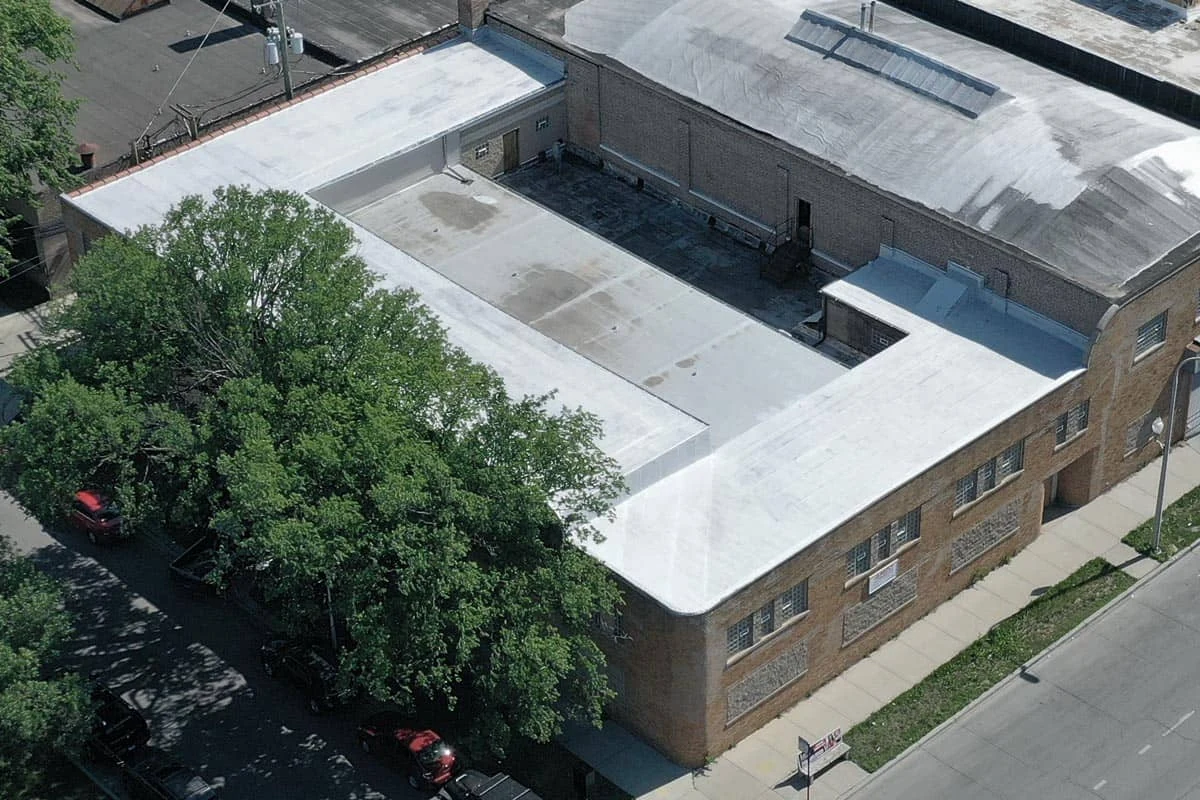
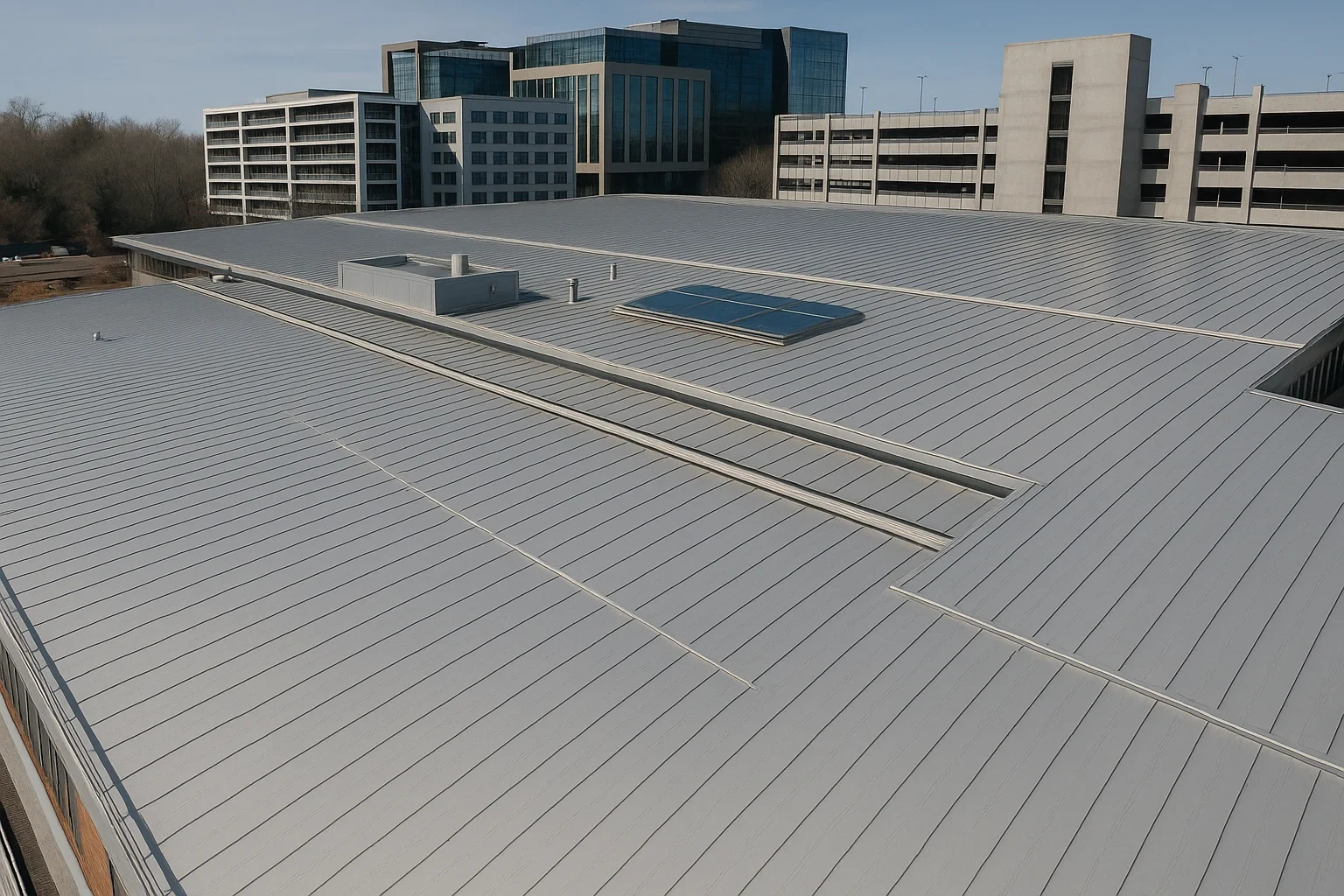
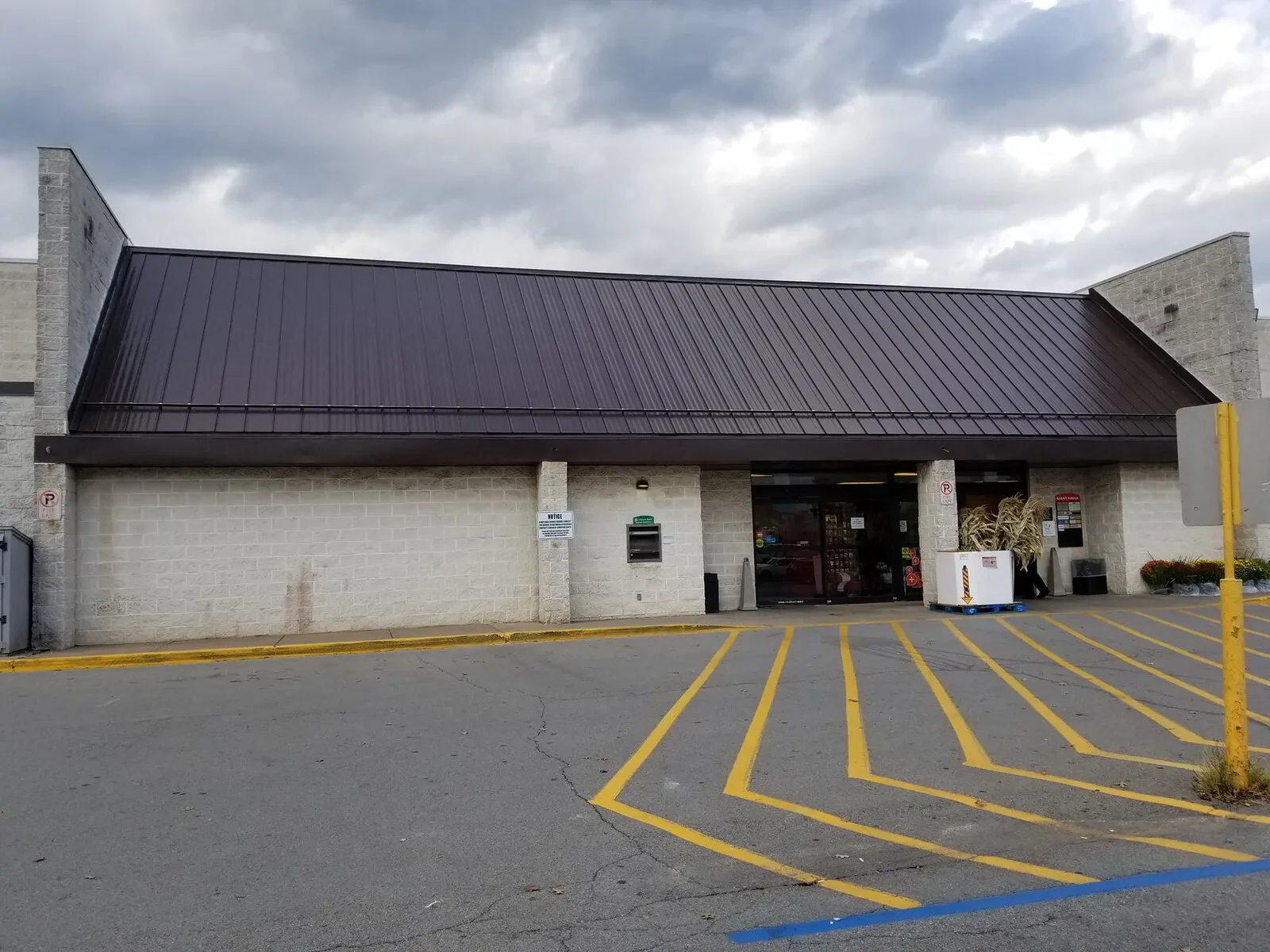
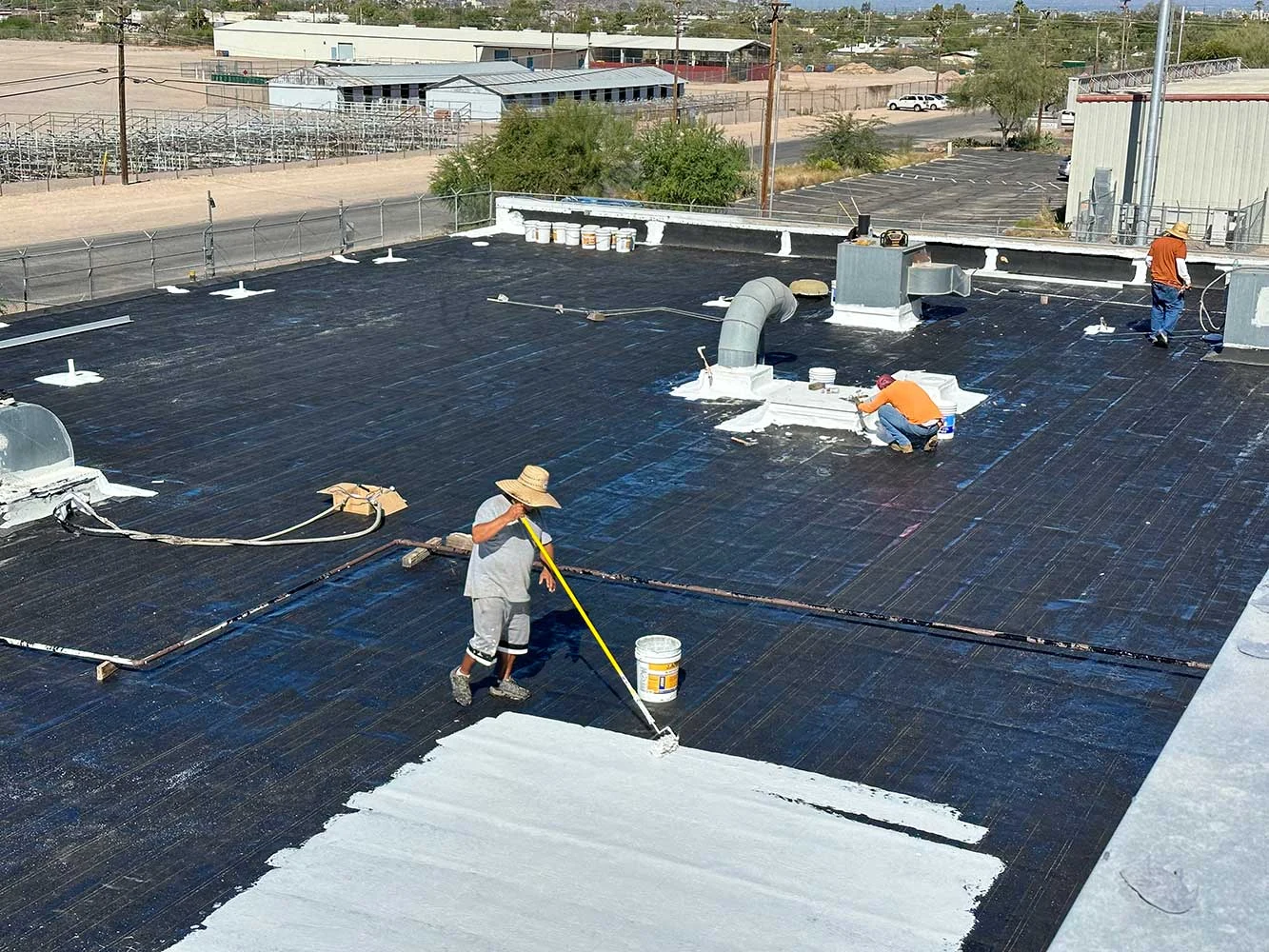
Every reroof estimate we write starts with the same question: recover or tear off. On a lot of Worcester's building stock , mill conversions along the Blackstone Canal, brick warehouses in the Canal District, flat-roof retail off Route 9 , that answer is tear-off more often than owners expect, and it changes the whole budget line.
Why a Recover Won't Clear Structural Review Here
Massachusetts building code caps a roof at two existing membrane layers before a recover is off the table. A lot of the older commercial stock around downtown and the Canal District is already on its second built-up roof from the 1980s or '90s, which means the next job is a tear-off by default, not a choice. We core-sample before we quote, because guessing at layer count is how a budget gets blown mid-project.
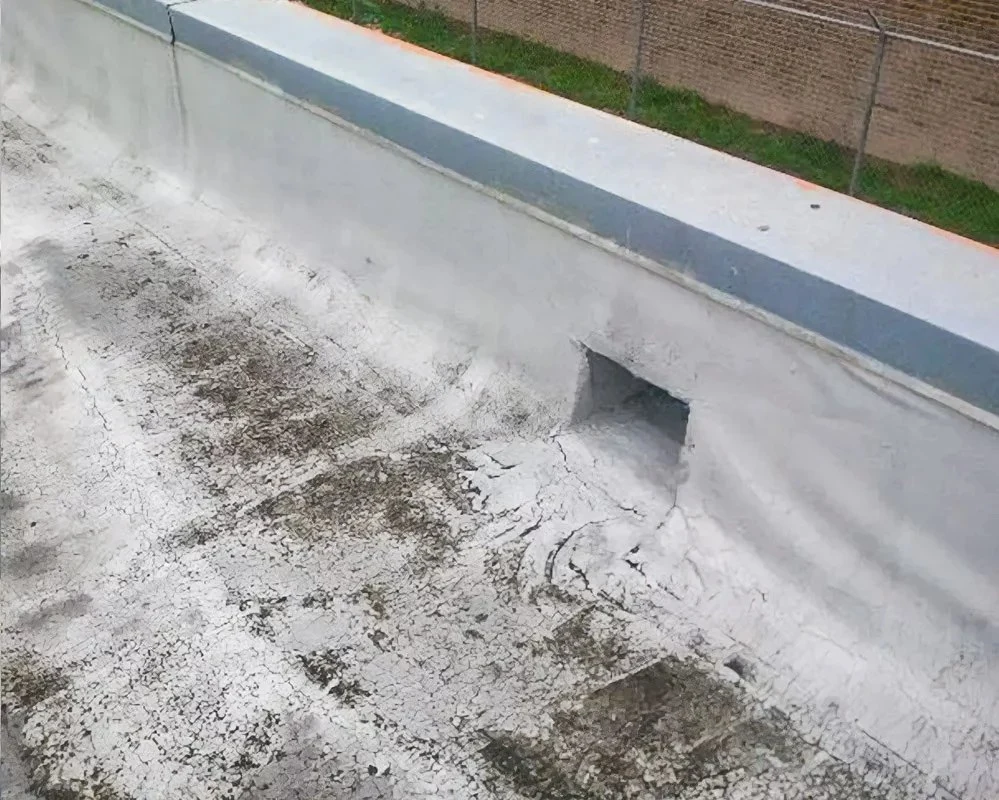
Wet insulation is the other disqualifier. Worcester's freeze-thaw cycle , repeated freezing and thawing through a New England winter , pushes moisture through pinholes and seam failures into the insulation board below. Once that board is saturated, covering it with a new membrane just seals the moisture in, where it keeps cycling and delaminating the new roof from underneath. An infrared moisture scan during the walk-through tells us how much of the deck needs to come out before we ever price the membrane.
Deck condition is the third check. Steel deck under a roof that's held standing water for years can be corroding at the seams; we won't warranty a membrane over a deck we haven't confirmed is sound.
Line Items That Move the Estimate
A Worcester tear-off budget breaks into distinct cost centers, and owners who've only ever priced a recover are usually surprised by how many of them there are.
- Tear-off labor and disposal, priced by tonnage to the transfer station
- Deck repair contingency, held as a per-square-foot allowance until the old roof is off and the deck is visible
- Insulation upgraded to current energy code R-value, often two boards instead of one
- Cover board over the insulation for hail and foot-traffic resistance
- Membrane material and labor, priced per square by thickness and attachment method
- Flashing detail work at parapets, curbs, and penetrations
- Drain and scupper modification if the tear-off exposes undersized or misplaced drainage
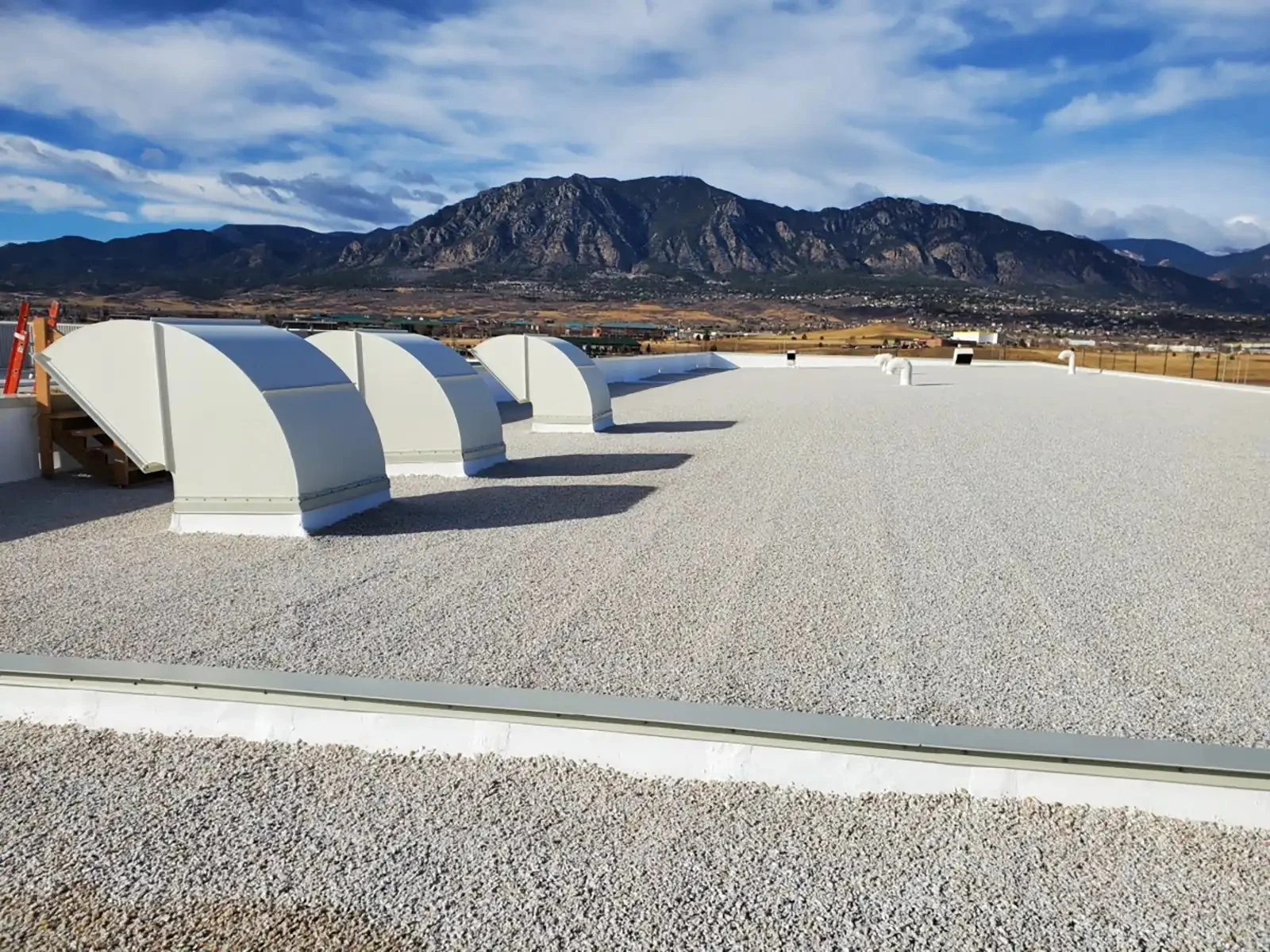
Disposal tonnage is the line item that swings the most on older buildings. A four-ply built-up roof with gravel ballast weighs multiples of what a single-ply membrane weighs, and tipping fees are charged by the ton.
Scheduling Around New England Weather Windows
Membrane adhesives and hot-air welds have minimum application temperatures, which narrows the reroof season here to roughly April through November with a soft close in late fall depending on the year. We sequence tear-off in phases small enough to dry-in each section same-day, because an open deck under a surprise October nor'easter is a bigger problem than a delayed schedule.
Owners on a fiscal-year capital plan often want the job priced a year out. We hold pricing conversations that early specifically so material can be ordered ahead of the spring rush, when every roofing crew in central Massachusetts is booking the same six-month window.
Snow Load Code Triggers When You Reroof
Reroofing can trigger a structural review even when you're not adding square footage, because added insulation thickness and a heavier membrane assembly change the dead load the deck and structure carry. Worcester sits at a meaningfully higher elevation than the coastal Massachusetts towns, and ground snow load design values reflect that , commercial low-slope roofs here are typically engineered in the 30 to 50 pounds per square foot range depending on exposure category and roof geometry, higher than a comparable building near the coast. If your structural drawings predate a code cycle, we flag that during the estimate so the engineering review doesn't surface as a change order after demolition starts.
Mechanically attached systems generally outperform ballasted systems in wind uplift here, and we default to mechanical attachment on anything above two stories unless the deck condition argues otherwise.
Matching Membrane to Campus, Hospital, and Lab Roofs
UMass Memorial and the UMass Chan Medical School campus can't take a rooftop mechanical unit offline for an afternoon, let alone a week, so hospital and lab reroofs get sequenced around rooftop equipment in small zones with temporary flashing between phases. The growing biotech footprint around Gateway Park brings the same constraint on a smaller scale , fume exhaust and lab makeup-air units on the roof need continuous operation, and membrane chemistry has to be compatible with what's venting nearby.
Campus buildings at Clark, Holy Cross, Assumption, and Quinsigamond Community College run on an academic calendar, not a fiscal one, so those reroofs get scheduled for the window between spring finals and fall move-in whenever the scope allows it.
Reroofing Questions From Worcester Facilities Managers
How do you decide between recover and full tear-off?
We core-sample the existing roof assembly and run an infrared moisture scan first. Layer count, wet insulation, and deck condition each independently disqualify a recover , any one of them puts you into a tear-off scope.
What drives cost per square foot on a Worcester tear-off?
Disposal tonnage, deck repair allowance, and insulation R-value are the three biggest swing factors. A building with gravel-ballasted built-up roofing costs more to remove than a single-ply membrane of the same size.
Can a reroof happen without shutting down a hospital or lab building?
Yes, by phasing the tear-off into zones sized to dry-in the same day and sequencing around rooftop mechanical and exhaust equipment that can't go offline.
Does reroofing trigger a structural review even without adding square footage?
Often, yes. Added insulation and membrane weight change the dead load, and Worcester's inland snow load values are higher than coastal Massachusetts, so older structural drawings sometimes need an engineering sign-off before we can proceed.
When should I lock in a reroof schedule?
Ideally a year ahead on a fiscal-year capital plan. It lets us order material before the spring rush and gives campus buildings a shot at the academic-calendar window.