
Edge Metal, Coping, and Gutter Details for Worcester Winters
Edge details take more abuse than the field of the roof in this climate. Coping, edge metal, and gutters sit at the boundary where thermal movement is most extreme and where ice and meltwater concentrate, which is why we budget and inspect them as a separate line item from the membrane itself.
Why Edge Details Fail First in a Freeze-Thaw Climate
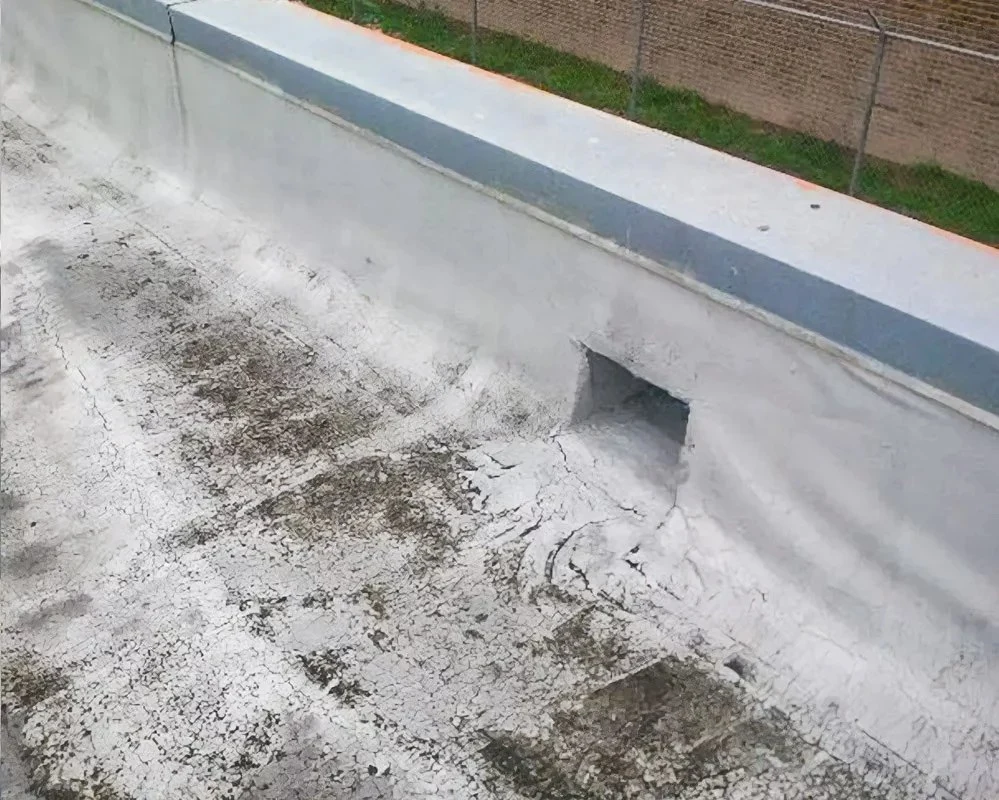
Metal expands and contracts more per degree of temperature swing than membrane does, and edge metal sits fully exposed to both direct sun and direct cold with nothing insulating it from either. Every freeze-thaw cycle works the fasteners and seams a little looser. On a roof that's ten or fifteen years old, edge metal fastener back-out is one of the most common findings on our inspections, well before the membrane itself shows comparable wear.
We check edge metal on every visit regardless of what triggered the call, since a loose fastener here is quick to catch and cheap to fix compared to what happens if it's missed for a full season.
Coping Cap Failures Under Repeated Freeze-Thaw Cycling
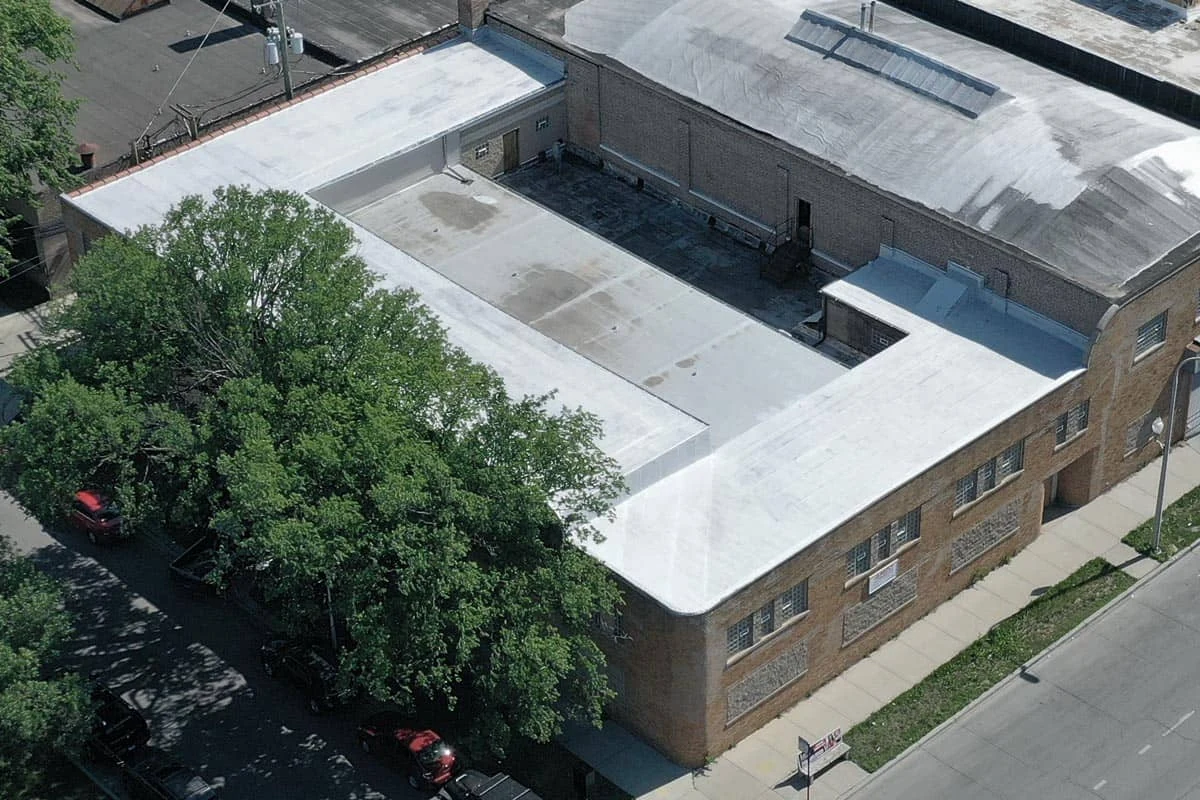
Parapet coping caps cover the top of the wall and are supposed to shed water to either side, but the seams between coping sections move with every thermal cycle, and sealant at those joints fatigues faster than sealant anywhere else on the roof. Once a coping seam opens, water gets behind the cap and into the wall assembly rather than the roof membrane , a leak that shows up as staining on an interior wall near the ceiling line rather than a roof leak in the usual sense, which sometimes gets misdiagnosed until someone gets up on the roof and checks the coping directly.
A telltale sign from the ground is discoloration streaking down the parapet wall below a coping joint , that streak is usually water finding its way out from behind the cap, and it's worth reporting even before an interior stain appears.
Ice Dam Formation at Eaves and Gutters
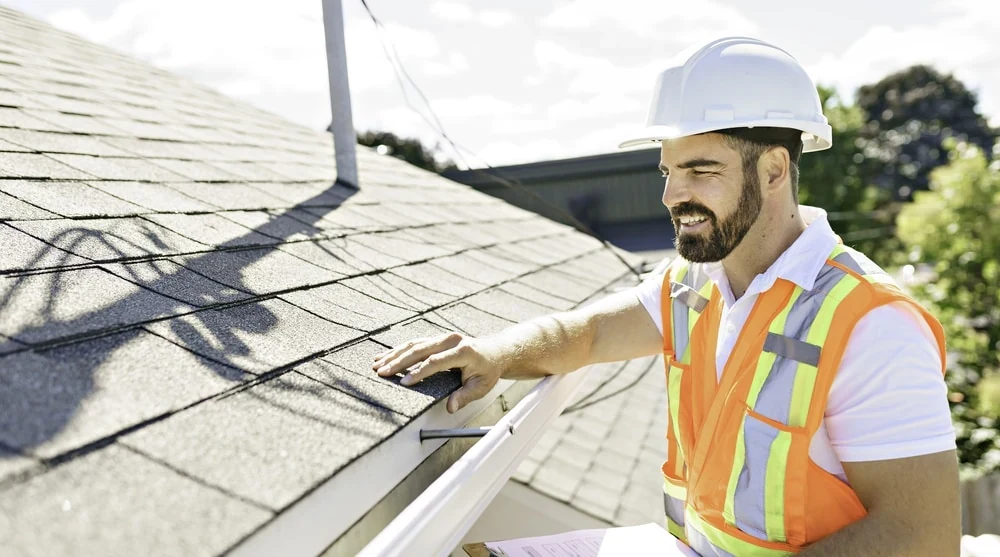
Gutters and eave edges are where snowmelt refreezes fastest, since that's the coldest point on the roof assembly with the least residual building heat underneath. Undersized gutters make this worse , a gutter that can't carry meltwater volume during a rapid thaw backs up and freezes solid, and once it's frozen, every subsequent thaw cycle has nowhere to drain. Heat cable placed correctly along the eave and inside the gutter run keeps a channel open through the coldest stretches, but it has to be sized and positioned for the actual drainage path, rather than simply draped along the edge as an afterthought.
We test heat cable continuity with a simple amperage check rather than relying on a visual look at the cable, since a section can look intact while a break in the internal element leaves it drawing no power at all.
- Edge metal fastener condition and spacing
- Coping cap seam sealant and cap-to-wall attachment
- Gutter sizing relative to roof drainage area
- Heat cable placement and continuity at eaves and gutters
- Downspout condition and discharge point clearance
- Snow guard presence on any sloped or standing seam sections
Snow Guards on Standing Seam Sections
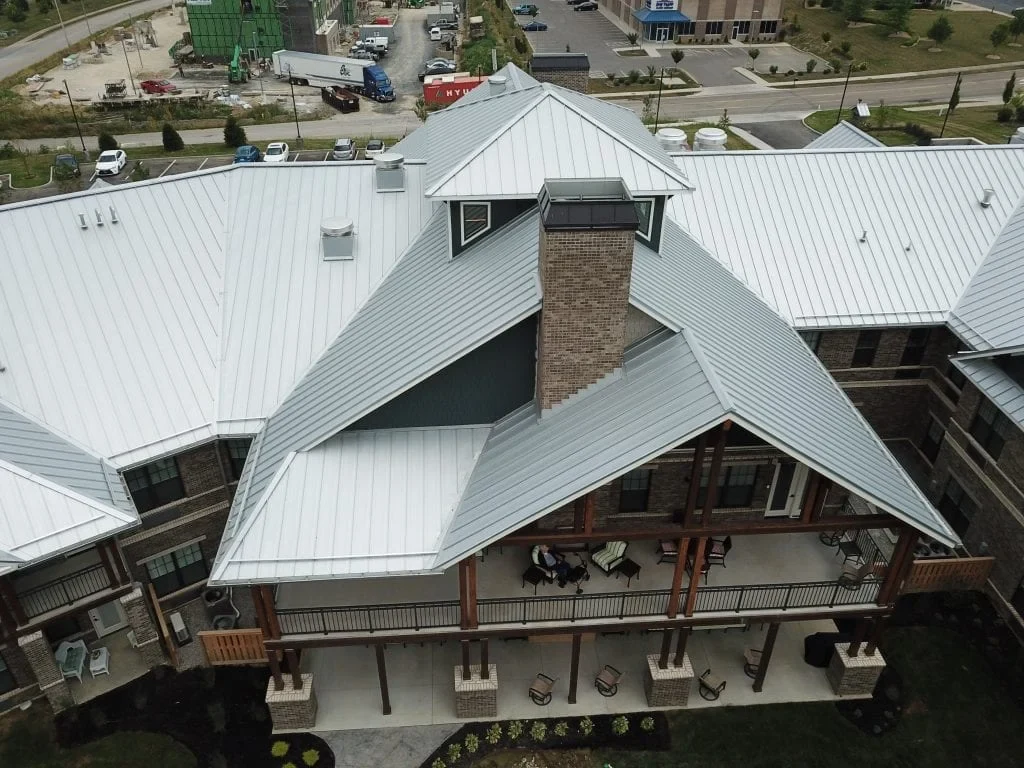
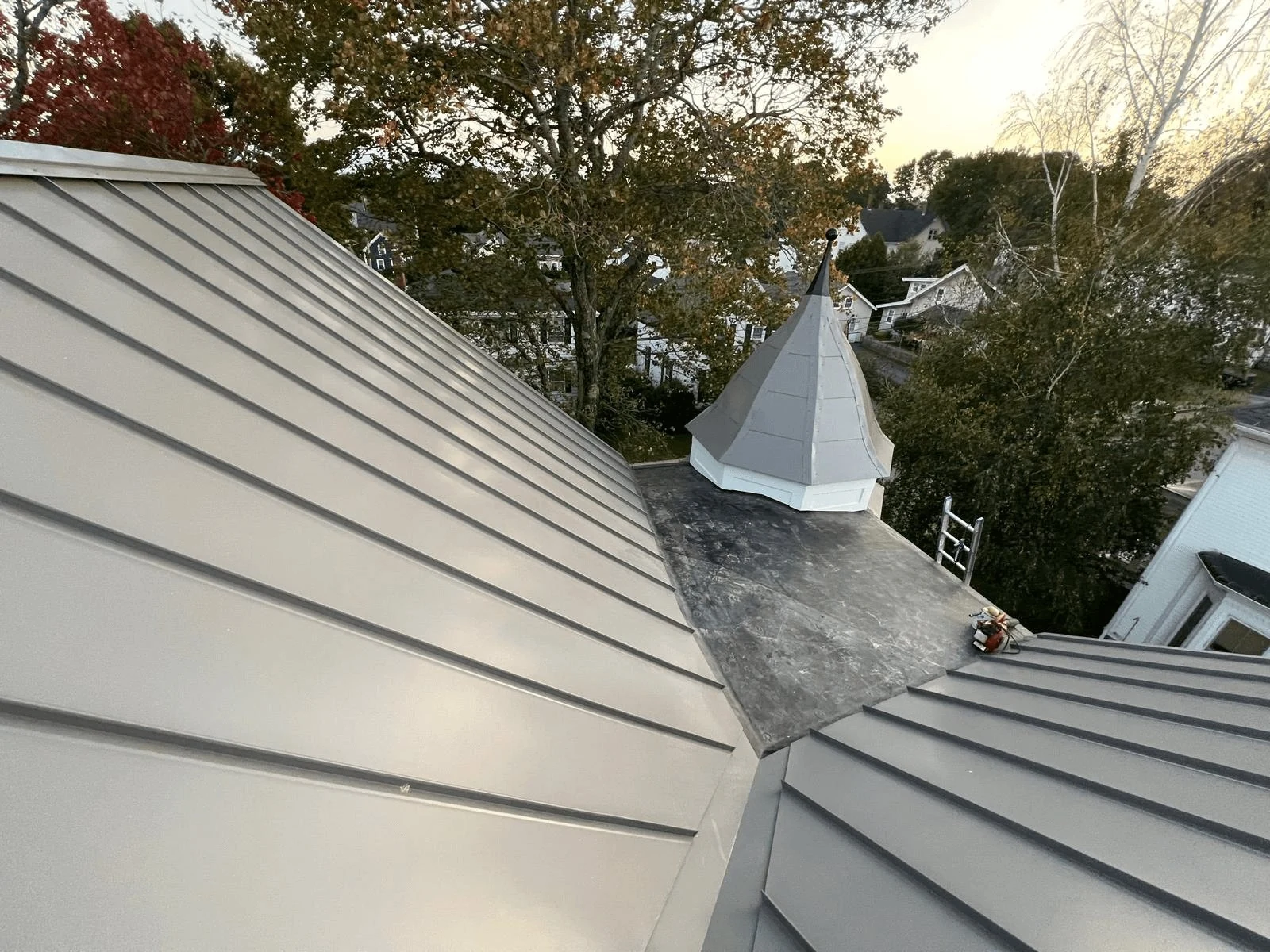
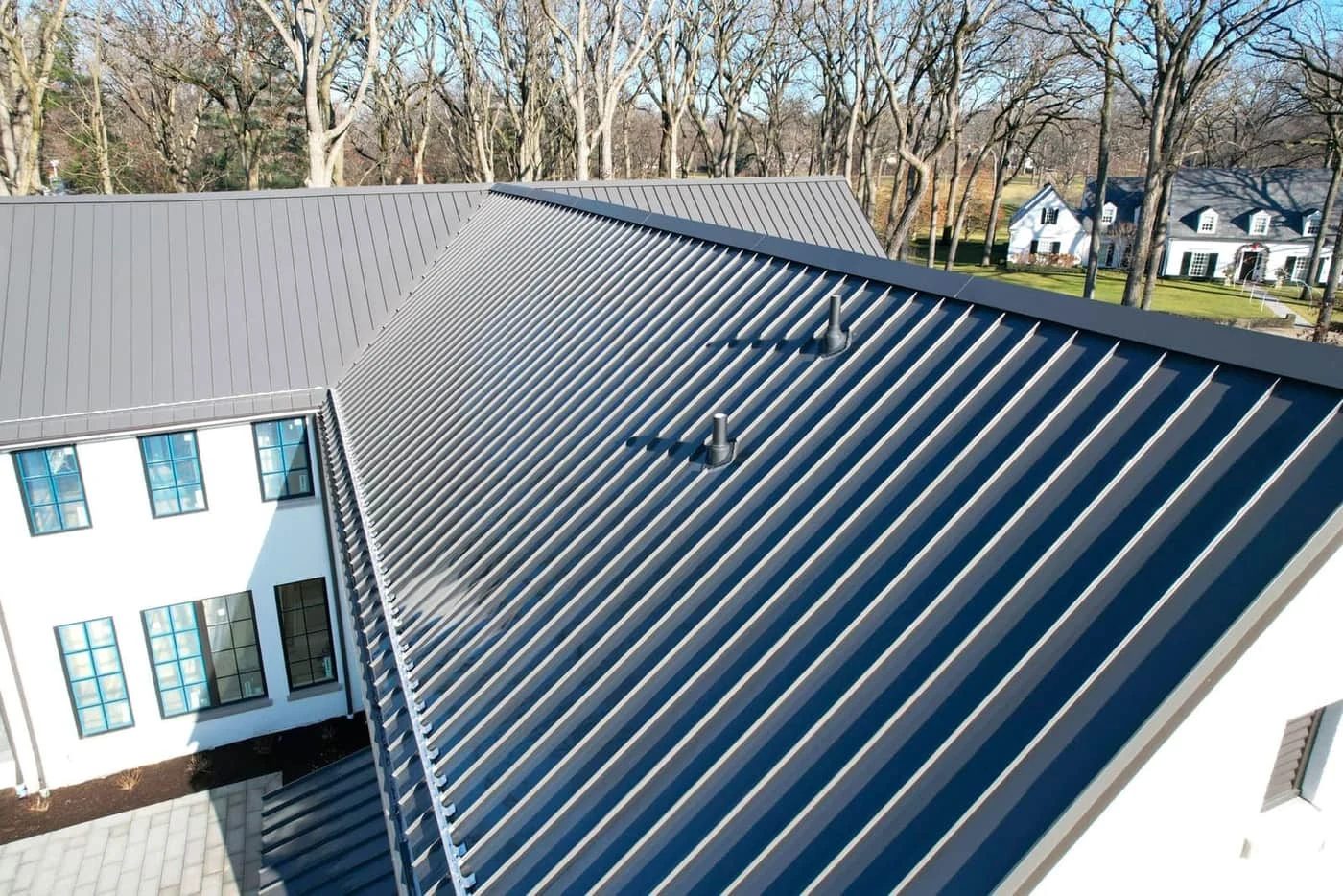
Buildings with a standing seam metal canopy, mansard, or entry roof over a sidewalk or loading area carry a separate hazard: a slab of snow and ice releasing all at once off a smooth metal surface onto whatever's below. Snow guards break that slab up into smaller, more controlled releases instead of one large slide. We retrofit these on entry canopies and any metal section positioned over pedestrian paths or loading docks, since a sudden slide off an unguarded section is both a liability exposure and a real safety issue during a thaw.
On a larger canopy or mansard section, guards get staggered across two or three rows rather than a single line at the eave, since one row alone can still let enough accumulated weight build up between guards to release as a smaller but still hazardous slide.
Budgeting Edge Metal Replacement Separately from Membrane
Edge metal, coping, and gutters often need replacement or a mid-life refresh well before the membrane reaches the end of its service life, because they're absorbing more thermal cycling than the field of the roof. We price these components per linear foot separately from the membrane square-footage cost, so a facilities manager isn't blindsided by an edge metal replacement showing up as an unplanned expense in year eight of a twenty-year membrane warranty.
We flag edge metal condition in every inspection report specifically so it shows up on the capital plan on its own timeline, separate from the membrane warranty countdown that most facilities software tracks by default.
Edge Detail Questions We Get
Why does edge metal fail before the rest of the roof?
It absorbs more thermal expansion and contraction than the field membrane and sits fully exposed, so fasteners and seams work loose faster through repeated freeze-thaw cycles.
What causes a coping cap to leak into a wall instead of the roof?
Seam sealant between coping sections fatigues from thermal movement, letting water behind the cap and into the wall assembly rather than onto the roof membrane.
Does gutter size actually matter for ice dams?
Yes. An undersized gutter can't carry meltwater volume during a rapid thaw, backs up, and freezes solid, which compounds ice buildup at the eave over the rest of the winter.
Do all buildings need snow guards?
Only sections with smooth sloped or standing seam metal roofing positioned over sidewalks, entries, or loading docks, where a sudden snow slide would be a hazard.
Should edge metal be budgeted with the membrane replacement?
Not necessarily on the same timeline , edge metal often needs attention mid-life through a membrane's service term, so we price it as its own line item.